
Views: 0 Author: Site Editor Publish Time: 2025-11-13 Origin: Site


In modern manufacturing, precision is paramount. Industries such as automotive, aerospace, and electronics rely heavily on cutting tools whose quality directly impacts efficiency, cost, and reliability. A CNC step grinding machine is a high-precision tool designed to meet these rigorous demands. By integrating multi-axis automation, intelligent software, and durable mechanical components, these machines deliver exceptional accuracy, repeatability, and productivity.
Unlike conventional grinding machines, a CNC step grinding machine can handle complex geometries with intricate step features, maintain consistent quality across production batches, and significantly reduce the need for manual intervention. These machines are engineered to handle a wide range of materials, including hard metals like tungsten carbide, high-speed steel, and specialized alloys, making them indispensable for modern precision manufacturing.
The importance of a CNC step grinding machine extends beyond simple material removal. Its ability to execute precise, multi-step grinding operations in a single setup allows manufacturers to achieve high tool consistency while reducing setup times and operational complexity. This makes CNC step grinding machines not only a technical asset but also a strategic investment for manufacturers aiming to remain competitive in high-precision industries.
The machine bed and frame form the foundation for all grinding operations. High-quality CNC step grinding machines use rigid, vibration-resistant frames constructed from materials such as cast iron or engineered steel. This ensures minimal deflection during operation and preserves machining accuracy over long production cycles. A stable bed also contributes to uniform heat distribution, reducing the risk of thermal deformation that can affect precision.
Multi-axis CNC systems are essential for producing complex tool geometries. CNC step grinding machines typically feature four to six axes, which allow precise positioning of both the workpiece and the grinding wheel. Advanced systems incorporate synchronized motion of linear and rotary axes to grind step features, tapers, and curved surfaces with high repeatability. The multi-axis capability enables the machine to complete multiple grinding operations in a single setup, reducing errors caused by repositioning and minimizing overall cycle time.
The spindle, which rotates the grinding wheel, is a critical component for achieving optimal material removal rates and surface finishes. CNC step grinding machines employ high-speed, precision spindles capable of maintaining consistent rotational accuracy under varying loads. Grinding wheels come in various materials, such as cubic boron nitride (CBN), diamond, and aluminum oxide, depending on the tool material and surface finish requirements. Many modern machines include automatic wheel dressing and balancing mechanisms to maintain grinding consistency and prolong the wheel’s service life.
At the core of a CNC step grinding machine is its CNC controller and accompanying software. The controller manages all machine movements, coordinates grinding paths, and ensures that each step operation is executed according to programmed specifications. Advanced software integrates tool profiles, material characteristics, and grinding parameters, allowing automated adjustment of feed rates, spindle speeds, and grinding depths. This ensures optimal grinding efficiency, maintains tight tolerances, and reduces operator dependency.
Peripheral devices enhance machine performance, workflow, and operational safety. Typical peripherals include automatic loading and unloading systems, coolant and filtration units, dust extraction systems, and specialized tool holders or fixtures. These components streamline the grinding process, minimize operator fatigue, and ensure consistent output quality, particularly in high-volume production environments. Proper integration of peripherals also allows for continuous operation and reduces downtime between production runs.
The multi-axis system of a CNC step grinding machine ensures precise, synchronized movements across linear and rotational axes. Each axis works in harmony, following the programmed path to grind complex tool geometries accurately. This synchronization allows for simultaneous grinding of multiple surfaces or steps, which significantly enhances precision and reduces cycle time.
Step grinding involves sequentially grinding individual steps or surfaces on a cutting tool. Each step is carefully controlled by the CNC software to achieve exact dimensions, angles, and surface finishes. By performing multiple grinding operations in a single setup, the machine minimizes setup errors, reduces material handling, and maintains high consistency across multiple parts. The precise control of feed rates, spindle speeds, and grinding depth allows operators to achieve superior surface quality and dimensional accuracy.
Automation is one of the defining features of CNC step grinding machines. Built-in sensors and feedback systems continuously monitor the spindle, tool position, and feed rates. The machine automatically compensates for any deviations, maintaining precise tolerances throughout the grinding process. This automated control reduces operator intervention, enhances repeatability, and ensures that each tool meets strict quality standards.
The accuracy of a CNC step grinding machine is influenced by several factors, including machine rigidity, spindle quality, axis servo motors, and CNC algorithms. Modern machines achieve tolerances as tight as ±0.001 mm, which is essential for precision cutting tools. In addition, advanced compensation mechanisms correct for thermal expansion, tool wear, and mechanical backlash, further improving overall precision.
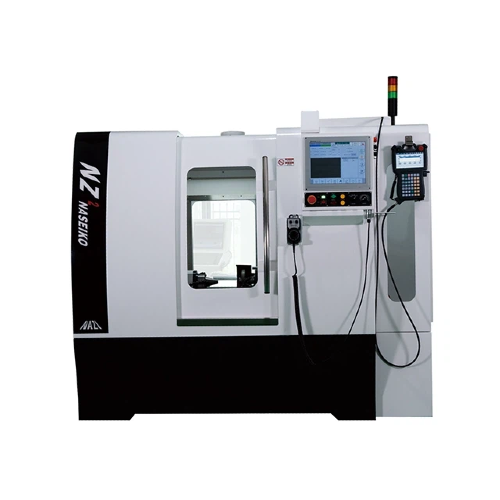
CNC step grinding machines are widely used to manufacture high-precision cutting tools, such as end mills, drills, taps, and reamers. These tools often feature multiple steps, tapers, and intricate geometries that require high accuracy for proper function. The ability to grind multiple steps in one setup reduces production time while maintaining uniform quality.
In the electronics sector, small-diameter precision tools are crucial for component manufacturing. CNC step grinding machines provide the necessary accuracy and surface finish for these tools, ensuring that they perform reliably during high-volume production. Their capability to maintain tight tolerances is especially important for 3C devices, where even minor deviations can lead to product defects.
Automotive and aerospace components require specialized cutting tools for machining complex materials and geometries. CNC step grinding machines provide the precision and consistency needed to produce these tools, which improves component performance and tool lifespan. The multi-axis functionality ensures that intricate geometries can be achieved efficiently without multiple setups.
Other industries, such as medical device manufacturing, optical component production, and industrial machinery, also benefit from CNC step grinding machines. The machines’ versatility and precision make them suitable for producing tools used in highly specialized applications that demand strict adherence to dimensional specifications.
High Precision: Multi-axis CNC control allows grinding of complex geometries difficult to achieve with conventional machines.
Increased Productivity: Multiple steps can be ground in a single setup, reducing cycle time and setup errors.
Reduced Manual Error: Automation ensures repeatable, high-quality results, minimizing human intervention.
Cost Efficiency: By reducing material waste, tool rejection rates, and labor costs, CNC step grinding machines provide a strong return on investment.
Advantage | Description |
High-Precision Grinding | Maintains micron-level tolerances for complex tool shapes |
Increased Productivity | Reduces cycle time and allows continuous operation |
Reduced Manual Error | Ensures consistent quality with minimal human intervention |
Cost Efficiency | Lower tool rejection and material waste, maximizing ROI |
Proper maintenance ensures long-term performance and stability.
Maintenance Area | Best Practices |
Machine Bed & Frame | Clean regularly, inspect alignment, and avoid excessive vibration |
Grinding Wheel | Dress wheels periodically, replace worn wheels |
CNC Controller & Software | Update software, back up settings, and monitor error logs |
Spindle & Motors | Lubricate moving parts and monitor for unusual noise or heat |
Coolant & Filtration | Replace coolant periodically and clean filters to prevent contamination |
Peripherals | Inspect automatic loaders and fixtures to ensure proper functioning |
Routine maintenance not only preserves accuracy but also prevents unexpected downtime, prolonging the operational life of the machine.
Manufacturers must evaluate production volumes, tool complexity, and required tolerances before selecting a machine. Understanding these requirements ensures that the chosen machine aligns with operational needs and future growth.
Key specifications to consider include:
Number of axes (4, 5, 6-axis)
Maximum tool diameter and length
Spindle speed and power
Software capabilities and level of automation
Selecting a reputable manufacturer ensures long-term reliability, technical support, and access to spare parts. High-quality brands provide service packages that help maintain consistent performance over the machine’s lifetime.
While initial investment is significant, evaluating the total cost of ownership, including maintenance, energy consumption, and potential ROI, ensures that the machine provides long-term value.
A CNC step grinding machine has become an essential tool in modern precision manufacturing. Its capability to grind complex tools with exceptional accuracy, combined with advanced automation and minimized operational errors, makes it invaluable for industries including automotive, aerospace, electronics, and medical devices. To fully leverage these benefits, selecting the right machine, following proper operational procedures, and performing regular maintenance are crucial for achieving consistent tool quality and maximizing productivity.
For manufacturers seeking high-performance CNC step grinding solutions, Nazai (Zhejiang) Intelligent Technology Co., Ltd. offers a wide range of advanced grinding machines designed to meet diverse industrial needs. Their machines integrate multi-axis control, intelligent software, and robust mechanical design, providing reliable, precise, and efficient grinding for a variety of tool types and materials. By exploring Nazai’s product offerings, companies can identify the ideal solutions for their production requirements, improve operational efficiency, and reduce tool wear.
To learn more about their CNC step grinding machines, explore detailed specifications, or request professional guidance tailored to your workshop, visit Nazai (Zhejiang) Intelligent Technology Co., Ltd. and get in touch with their expert team today.
1. What is a CNC step grinding machine used for?
Primarily for high-precision grinding of cutting tools with multiple step features.
2. How does a CNC step grinding machine differ from conventional grinders?
It offers multi-axis automation, real-time feedback control, higher precision, and reduced human error.
3. Which industries benefit most from CNC step grinding machines?
Electronics, automotive, aerospace, medical device, and other precision tool manufacturing sectors.
4. How often should the machine be maintained?
Daily cleaning, weekly component inspections, and regular software updates are recommended for optimal performance.
5. Can CNC step grinding machines handle complex tool geometries?
Yes, multi-axis CNC systems allow grinding of intricate and customized tool profiles with micron-level tolerances.
6. What are the main advantages of CNC step grinding machines?
High precision, increased productivity, reduced manual errors, lower costs, and longer tool lifespan.
7. How do I choose the right CNC step grinding machine for my workshop?
Evaluate production requirements, machine specifications, brand reliability, automation level, and total cost of ownership.


