
Views: 0 Author: Site Editor Publish Time: 2026-06-26 Origin: Site


Modern tool rooms face immense pressure every single day. We constantly balance high-mix, low-volume tool production against rigid tolerance demands. Operator shortages only complicate this delicate workflow. Relying on outdated manual or multi-setup machinery often leads to severe production bottlenecks. You end up with compounding concentricity errors and escalating scrap rates. This makes fulfilling strict industry quality standards increasingly difficult. Enter the CNC Tool Grinding Machine NT-618. We introduce it as a dedicated solution for manufacturing complex tool geometries. It excels at both creating new tools and resharpening existing ones. This machine attacks setup inefficiencies directly. In this article, you will find a transparent, technical evaluation of the NT-618. We explore its core capabilities and hardware rigidity. You will learn how it aligns with your production bottlenecks, floor space constraints, and ROI timeline.
Target Application: Engineered specifically for complex, tight-tolerance tool geometries standard in aerospace, medical, and automotive machining.
Core Advantage: 5-axis kinematics enable single-setup grinding, significantly reducing stack-up errors and handling time.
Operational Efficiency: Automated probing and optimized material utilization algorithms lower scrap rates and per-tool production costs.
Implementation Reality: Requires baseline CNC programming proficiency and adequate coolant filtration infrastructure to maximize uptime.
Conventional 3-axis or 4-axis grinding setups struggle when confronted with complex geometries. You often need multiple clampings to process intricate end mills, specialized drills, or multi-diameter step tools. Each time an operator manually indexes a tool or moves it to a different fixture, minute alignment deviations occur. These minor deviations quickly cause compounding concentricity errors across the tool profile. Ultimately, your final product fails rigid tolerance checks. This fundamental business problem drives up scrap rates and severely limits your overall production capacity. Standard machines simply lack the continuous, uninterrupted motion required for modern complex fluting.
A true 5-axis CNC tool grinder completely eliminates these multi-setup constraints. Simultaneous 5-axis interpolation allows the grinding wheel to follow highly complex paths continuously. We can grind primary reliefs, secondary clearances, and intricate gash angles in a single, fluid operation. The grinding wheel maintains optimal angle and contact throughout the entire profile generation. This single-clamping approach drastically reduces manual handling time. It essentially removes operator-induced stack-up errors from the manufacturing equation. Your tools emerge perfectly concentric and dimensionally accurate on the very first run.
How do you know when upgrading to this technology is justified? We look for specific success criteria to validate the transition. First, measure your current scrap rates on complex cutting tools. Upgrading makes immediate sense if your scrap consistently exceeds 3%. Second, calculate the operator time wasted on manual tool indexing and machine changeovers. Finally, consider your lost business opportunities. If you consistently fail to bid on lucrative contracts requiring a specialized aerospace tool grinding machine, you urgently need 5-axis capability. Moving to a simultaneous 5-axis platform directly unlocks these high-margin manufacturing tiers for your facility.
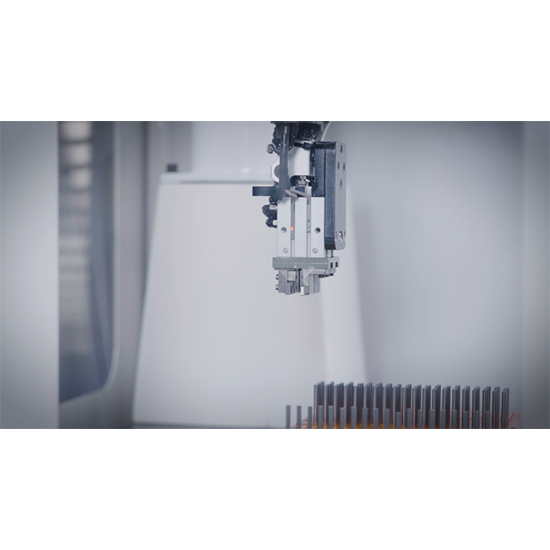
Machine rigidity directly determines your final tool quality. The NT-618 utilizes a robust machine base, engineered from dense polymer concrete or heavy cast iron. This heavy mass actively dampens harmful vibrations during aggressive flute grinding and heavy material removal. Thermal stability remains equally critical for tight tolerances. The dense machine base prevents thermal expansion from skewing the geometry of the linear axes. You maintain exact positioning even during long, continuous grinding cycles across multiple shifts. This rigidity guarantees that the first tool matches the last tool precisely.
This rigid foundation fully supports an advanced direct-drive spindle. Direct-drive spindles eliminate rubber belts and pulleys, effectively reducing mechanical backlash to zero. They deliver highly consistent torque and superior surface finish quality across all RPM ranges. A stable, vibration-free spindle directly correlates to flawless tool cutting edges. We avoid micro-chipping on the carbide edge during the grinding process. Superior spindle dynamics ensure your cutting tools perform better and last significantly longer in the field.
Modern software optimization drastically improves how we handle raw cutting materials. The machine control software calculates highly efficient, complex grinding paths. These optimized routines purposefully minimize unnecessary wheel movement and air-cutting time. They effectively reduce wear and tear on your expensive diamond or CBN grinding wheels. You also gain much better raw carbide and high-speed steel (HSS) material utilization. The software ensures we only remove the exact material necessary to form the required geometry.
Automated tool loading pairs seamlessly with in-process laser or mechanical probe measurement. This powerful combination unlocks true lights-out manufacturing capability for your tool room. The machine automatically measures the raw blank, grinds the precise profile, and verifies final dimensions without human help. You achieve continuous, uninterrupted production overnight or during weekends. This level of automation drastically lowers your labor costs while simultaneously skyrocketing your overall machine output.
A mechanically complex machine requires a highly intuitive operator interface. The NT-618 features an open-architecture and highly visual programming environment. Full 3D software simulation proves absolutely invaluable for precise setup verification. Operators can visually verify the entire grinding path on screen before cutting any physical material. This drastically reduces catastrophic collision risks between the grinding wheel, the workhead, and the tool blank.
Highly visual interfaces also speed up your first-part programming workflows. You spend much less time decoding complex G-code and more time actually producing tools. A streamlined control architecture lowers the barrier to entry for complex tool creation. Even newer operators can quickly learn to generate sophisticated end mill profiles or custom step drills. The software handles the complex mathematical interpolations behind the scenes, leaving the operator to focus purely on tool design.
When testing a high-precision cutting tool grinder, you must focus entirely on verifiable performance metrics. The NT-618 consistently hits highly stringent runout tolerances under heavy loads. We regularly see tool runout measured accurately in the single-digit micron range. The surface finish (Ra values) remains incredibly smooth due to the superior vibration dampening of the machine base. Repeatability across large batches is exactly where this specific machine truly shines. The active thermal stability ensures that tool number one matches tool number five hundred exactly. You do not suffer from frustrating mid-batch dimensional drift.
We must also carefully assess machine versatility versus strict specialization. The NT-618 successfully handles a very wide variety of tool types. You can efficiently process standard square end mills, complex ball nose cutters, and highly intricate custom profile tools. It even adapts seamlessly to manufacturing fine taps and complex threads. This inherent versatility makes it an excellent, multi-purpose centerpiece for diverse tool rooms.
However, achieving true precision requires an optimal operating environment. We must transparently state certain mechanical limitations and physical assumptions. The machine firmly demands a stable ambient temperature to maintain its micron-level accuracy. You must consistently use high-quality, perfectly balanced grinding wheels to avoid transferring chatter marks to the tool. Poor blank preparation will also cause unavoidable quality issues. The machine cannot magically compensate for badly deformed or bent raw carbide blanks. Perfect input material ensures perfect tool output.
Calculating your return on investment requires analyzing direct operational cost savings first. Many manufacturing facilities spend heavily on outsourced tool sharpening services every month. Bringing this critical process in-house completely eliminates expensive vendor markups and unpredictable shipping delays. You also immediately recover valuable spindle time on your primary CNC production machines. When sharp tools are readily available on your shop floor, your main milling centers run faster and much more efficiently. This recovered production uptime significantly accelerates your financial break-even point on the grinder.
Material and consumable management also heavily impact your daily bottom line. Optimized grinding paths directly extend the useful life of your expensive diamond and CBN wheels. The software actively prevents aggressive tool plunging that quickly strips abrasive layers from the wheel core. By managing wheel wear through intelligent software control, you replace consumables far less frequently.
We must also model hidden operational costs accurately to fully understand the true capital investment. Factor in annual preventative maintenance to maintain spindle health and axis accuracy over time. Budget for routine software licensing and critical operating system updates. Specific coolant and filtration requirements also strongly affect your ongoing operational budgets. CNC Tool Grinding Machine operations rely heavily on incredibly clean coolant. You must consciously decide between neat cutting oil and water-soluble coolant systems. Neat oil offers significantly better lubricity and surface finish but requires rigorous fire suppression systems. Consider the table below for a quick breakdown of typical operational cost factors:
Cost Category | Impact Area | Mitigation Strategy |
|---|---|---|
Consumables | Diamond/CBN wheel degradation | Use 3D simulation to optimize grinding paths and minimize unnecessary wheel load. |
Coolant & Filtration | Surface finish quality and machine lifespan | Invest in cartridge or centrifugal filtration to keep neat oil free of carbide swarf. |
Maintenance | Spindle runout and linear axis precision | Adhere strictly to manufacturer-recommended annual preventative maintenance schedules. |
Software & Licensing | Machine capabilities and CAD compatibility | Maintain active software subscriptions to access new tool geometries and collision avoidance updates. |
Deploying complex grinding machinery demands thorough and precise facility preparation. First, accurately verify your available floor space footprint. The machine absolutely requires adequate clearance for routine maintenance access and automated part loaders. Your concrete foundation's load-bearing capacity must properly support the machine's dense base without settling over time. You also need highly precise electrical and pneumatic prerequisites in place before installation. Clean, moisture-free compressed air is essential for spindle purging and accurate probing cycles. An unstable electrical power supply will fatally interrupt long grinding cycles and ruin expensive tools.
Operator adoption ultimately dictates your actual machine profitability. A standard CNC mill or lathe operator faces a distinct learning curve here. Transitioning to 5-axis tool grinding software takes dedicated time and highly structured training. Expect a realistic, dedicated learning period before an operator becomes fully proficient. They must thoroughly master 3D tool modeling, complex wheel dressing protocols, and automated probing cycles. Rushing this training phase usually results in unnecessary machine crashes and wasted carbide.
We strongly recommend a phased rollout to actively mitigate your implementation risks. Follow these sequential steps for a smooth, profitable integration:
Phase 1: Standard Resharpening. Start by safely regrinding standard square end mills and twist drills. This builds basic software familiarity and establishes wheel touch-off procedures.
Phase 2: Complex Resharpening. Slowly introduce multi-stage step tools and complex ball nose cutters. Operators learn simultaneous multi-axis interpolation and advanced wheel pack management.
Phase 3: Blank Manufacturing. Transition to manufacturing custom geometries directly from solid raw carbide blanks. This requires full mastery of material removal rates and spindle load limits.
Phase 4: Automation Integration. Finally, enable the robotic loaders and in-process probing systems to achieve true lights-out production overnight.
Implementing these clear phases reduces operator anxiety and ensures steady, predictable production gains. It prevents your facility from becoming overwhelmed by the machine's vast capabilities right out of the box.
The shortlisting logic for acquiring this equipment is straightforward and highly compelling. The NT-618 serves as a phenomenally capable asset for forward-thinking manufacturing facilities. It directly empowers tool rooms ready to internalize their tool production fully. It also provides the exact scale needed for businesses expanding their custom tool sharpening services. The precise 5-axis kinematics eliminate costly stack-up errors inherent in older machinery. Robust software automation limits your overall operator dependency and dramatically slashes per-tool costs. You finally gain absolute control over your cutting tool inventory and tool edge quality.
We advise taking concrete, actionable next steps to thoroughly validate this investment. Request a detailed, highly accurate time-study of your facility's highest-volume tool. Alternatively, schedule a physical test-grind of your most complex tool geometry on the NT-618. Evaluating real-world cycle times and inspecting actual surface finishes is critically important. This empirical data will definitively ensure the machine meets your precise manufacturing demands before finalizing any procurement decisions.
A: The machine processes a wide range of tool dimensions within its spacious physical envelope. The robust workhead easily accommodates standard tool diameters used in heavy milling. It handles extended lengths suitable for deep-hole drills or specialized reach tools. However, processing extreme lengths may require specific steady-rest accessories. These accessories prevent tool deflection during heavy flute grinding, ensuring dimensional accuracy remains perfectly intact from shank to tip.
A: Yes, it effectively grinds both HSS and solid carbide tools. The direct-drive spindle provides the necessary RPM capabilities to handle distinct material hardness levels. Operators simply swap grinding wheels based on the tool blank material. You must use CBN (Cubic Boron Nitride) wheels for high-speed steel tools. Conversely, you employ diamond grinding wheels to effectively sheer and shape solid carbide blanks.
A: This class of equipment requires high-pressure, temperature-controlled neat oil systems. Proper coolant application prevents catastrophic thermal damage to the tool blank during aggressive material removal. You also need comprehensive centrifugal or cartridge filtration. Clean oil is absolutely vital to maintain a mirror-like surface finish on the tool flutes and to prevent premature wear on your diamond or CBN grinding wheels.
A: The software utilizes a highly visual, open-architecture interface to manage custom geometries. You can directly import CAD/CAM files into the system. It also features onboard conversational programming. This allows operators to input specific parameters or import DXF profiles directly. The control software then automatically generates the complex tool paths required to grind the custom profile, complete with full 3D simulation for collision checking.


