
Views: 0 Author: Site Editor Publish Time: 2026-06-30 Origin: Site


Manufacturing custom components increasingly demands specialized cutting tools. Relying on external vendors for these unique geometries causes soaring costs and extends lead times. Outsourcing non-standard tool production drains resources and halts production schedules. Machine shops need reliable internal solutions to regain control over their workflow. The CNC Tool Grinding Machine NT-628 offers a targeted way to bring custom production and resharpening in-house. We will objectively evaluate its 5-axis capabilities, economical setup, and implementation realities for shops making this transition. This guide explores how transitioning to internal tool grinding reduces dependency on third parties. It provides actionable insights for adopting advanced machinery without overspending. You will learn how to evaluate equipment capabilities against your specific production requirements. Understanding your shop floor needs ensures a smooth transition. Taking command of your tool supply chain empowers greater manufacturing flexibility.
In-House ROI: The NT-628 reduces dependency on external grinding services, specifically for complex, non-standard carbide tools.
5-Axis Capability: True 5-axis, 5-linkage kinematics allow it to function effectively as both a forming cutter grinding machine and a rotary file grinding machine.
Balanced Economics: Designed to bridge the gap between entry-level 3-axis grinders and ultra-premium European machines, offering high precision and high stability at a strictly calculated cost-to-performance ratio.
Implementation Readiness: Success relies on understanding software compatibility, operator learning curves, and specific application matching (e.g., carbide tool geometries).
Machine shops cannot treat custom tooling the same way they treat standard end mills. Complex machining requires unique cutter geometries to achieve specific profiles or surface finishes. Relying on off-the-shelf tools often compromises the final product quality.
Standard 3-axis setups struggle significantly when processing modern, high-performance tools. They lack the rotational freedom required to grind variable pitch flutes or unequal helix angles. When operators attempt to grind complex profile geometries on standard machines, they face setup constraints. Multiple setups introduce positional errors. These errors compound and ruin tight tool tolerances. True simultaneous multi-axis motion is non-negotiable for complex cutting profiles.
Outsourcing solid carbide tools carries massive hidden expenses. External vendors charge premium rates for custom batches. You also face severe shipping delays that disrupt project timelines. Shops compensate by over-ordering custom tools to build buffer stock. This leads to severe inventory bloat. Capital gets tied up in tooling sitting on a shelf. Producing and regrinding these tools internally eliminates buffer stock requirements. You produce exactly what you need when you need it.
Not every tool justifies specialized machinery. We must clarify the tooling types driving the need for a dedicated non-standard cutter grinding machine. These include specialized step drills designed for one-shot hole making. They also include complex end mills optimized for exotic aerospace alloys. Custom profile tools used in automotive manufacturing fall into this category as well. These geometries demand precise interpolation across multiple axes simultaneously.
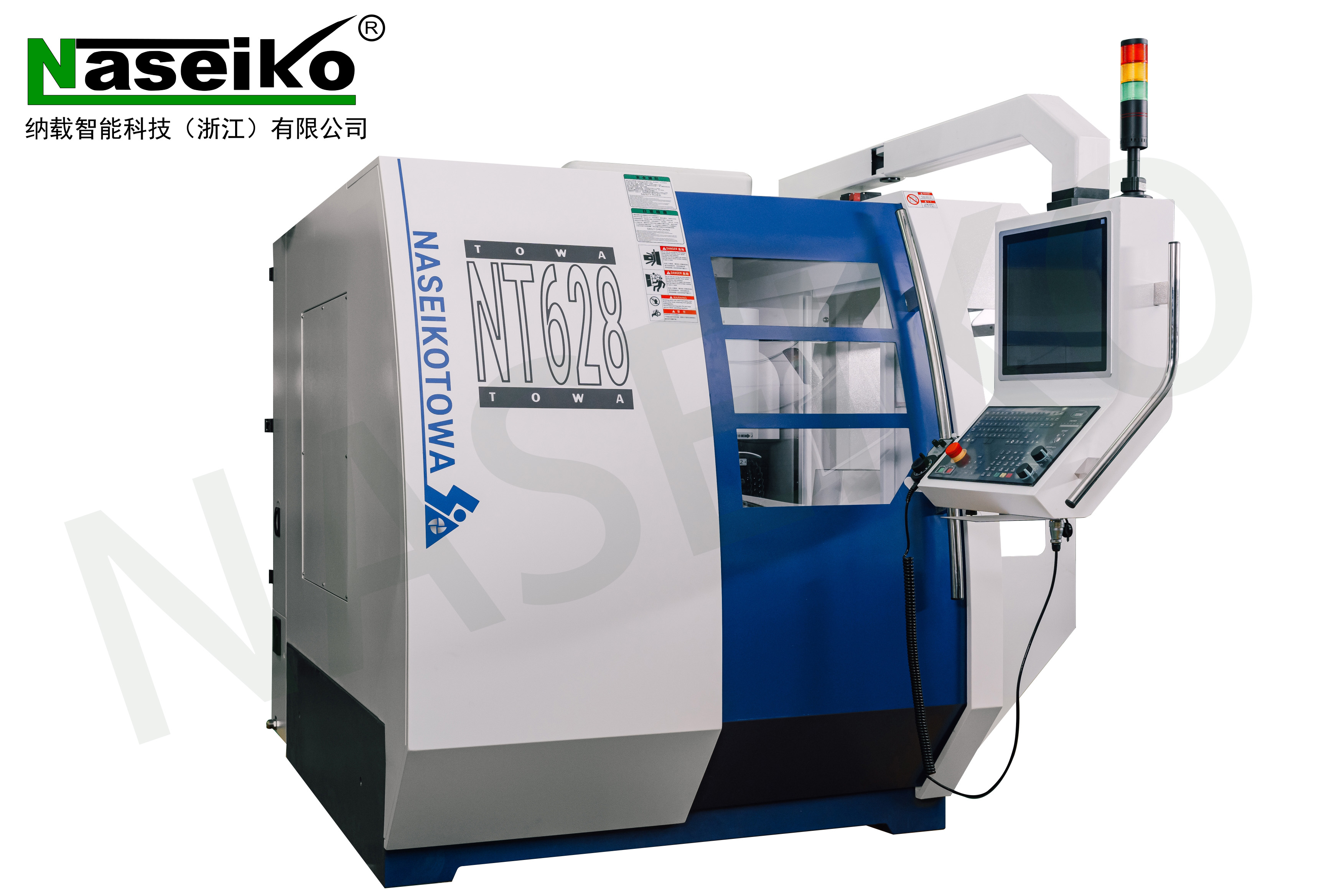
Robust machine architecture dictates grinding performance. High-end features must align with structural integrity to deliver repeatable results.
Simultaneous 5-axis movement allows for uninterrupted grinding paths. The machine controls three linear axes and two rotary axes at the exact same time. This continuous motion prevents dwell marks on complex geometries. It maintains consistent wheel contact throughout the entire tool path. This linkage proves crucial for holding tight tolerances. It handles complex flute lengths and intricate transition angles flawlessly. Without simultaneous linkage, stepovers create microscopic imperfections on the cutting edge.
Grinding solid carbide generates immense cutting forces. Machine bed rigidity becomes the primary defense against vibration chatter. The NT-628 utilizes a highly rigid framework to dampen these vibrations. Thermal stability also plays a massive role in precision. Changes in ambient temperature cause machine components to expand or contract. A thermally stable frame mitigates these microscopic shifts. High mechanical stability directly correlates to repeatable accuracy. You can grind a batch of fifty identical non-standard tools without chasing dimensional drift.
Versatility makes the investment worthwhile. A dedicated machine should handle various tool families efficiently.
Forming Cutter Focus: The machine excels at grinding precise, repeatable profiles for specialized forming cutters. You can import DXF profiles directly to define the tool shape. This capability makes it an ideal forming cutter grinding machine for high-mix production.
Rotary File Focus: Rotary files demand unique grinding wheel positioning. The NT-628 handles the steep helical grooves and dense tooth counts. Specialized software modules and rigid spindle setups transform it into a highly capable rotary file grinding machine.
Selecting the right grinding equipment requires careful evaluation. You must balance capability against your actual shop floor requirements.
You must evaluate the machine's initial capital expenditure against its expected lifecycle value. The NT-628 offers an economical positioning strategy. It avoids the inflated costs of over-engineered European machines. Many premium machines possess complex features a mid-sized shop will never use. You pay for software modules and automation cells that sit idle. The NT-628 focuses on core 5-axis capabilities. It delivers high-end accuracy at a strictly calculated cost-to-performance ratio.
Feature/Metric | Standard 3-Axis Grinder | NT-628 Economical 5-Axis | Ultra-Premium European Cell |
|---|---|---|---|
Complex Geometry Pathing | Manual setups required | Full simultaneous interpolation | Full simultaneous interpolation |
Capital Expenditure | Low | Medium (High ROI) | Extremely High |
Unused Feature Bloat | None | Minimal | High (often bundled) |
Ideal Shop Fit | Basic HSS regrinding | High-mix custom carbide | High-volume mass production |
Intuitive grinding software determines how fast you can make chips. Defining non-standard tool paths manually requires immense skill and time. Modern operators expect conversational programming interfaces. They need to input custom tool parameters quickly. The software should generate complex tool paths automatically. This eliminates the need for manual G-code programming for every distinct tool. A user-friendly software ecosystem drastically reduces setup times between different custom batches.
Grinding solid tungsten carbide demands specific hardware configurations. Spindle power must remain consistent under heavy loads. Coolant delivery systems must flood the grinding zone precisely to prevent thermal damage to the carbide matrix. High-pressure coolant prevents wheel loading. The CNC Tool Grinding Machine must accommodate diamond and CBN grinding wheels perfectly. Proper flange mounting and balancing ensure optimal surface finishes on hard materials.
Buying the machine represents only the first step. Integrating it into your daily operations requires careful planning and realistic expectations.
High-precision machines demand specific environmental controls. You cannot simply drop them onto any concrete floor. Follow these foundational requirements:
Footprint Considerations: Ensure adequate clearance for maintenance access and coolant tank extraction.
Foundation Requirements: Install a proper isolation pad. Vibration mitigation prevents external shop floor noise from affecting tool finishes.
Ambient Temperature Controls: Maintain a stable climate. Temperature swings cause thermal expansion in the machine casting, which destroys sub-micron tolerances.
Power Quality: Use clean, regulated electrical power to prevent control system glitches.
Moving an operator from standard regrinding to 5-axis programming involves a steep learning curve. Operators must understand complex spatial kinematics. They must learn how to simulate tool paths before grinding. Proper wheel dressing and truing protocols become critical. A poorly dressed wheel ruins expensive carbide blanks instantly. Operators must also master machine calibration routines. Daily probing checks ensure the grinding wheel remains perfectly aligned with the machine coordinate system.
Preventative maintenance ensures long-term stability. You must identify typical wear components early. Spindle bearings endure massive side loads during heavy fluting passes. They require careful monitoring for excess heat or vibration. Coolant filters demand regular replacement. Dirty coolant recirculates abrasive swarf, which degrades pump seals and ruins workpiece surface finishes. Establish a strict weekly and monthly maintenance schedule to minimize unexpected downtime risks.
Every manufacturing facility faces unique challenges. Evaluating your specific production mix determines if this machine aligns with your goals.
Ideal Scenarios: The NT-628 excels in high-mix, low-volume production environments. It fits perfectly in shops producing custom solid carbide tools. Facilities looking to bring forming cutter production in-house benefit greatly. It serves well as a dedicated rotary file grinding solution. Mid-sized shops needing economical 5-axis capabilities find their sweet spot here.
Alternative Scenarios: Some shops require high-volume, single-tool mass production lines. These environments might necessitate dedicated automation cells with robotic loading. Conversely, shops exclusively handling basic HSS tool resharpening do not need this complexity. A simpler 3-axis machine suffices for basic drill sharpening.
Next-Step Actions: Do not rely on spec sheets alone. Request a time-study from the manufacturer. Send them your specific non-standard tool designs. Ask for a test-grind demonstration. Verify the actual cycle times required to produce your geometry. Inspect the surface finish on the cutting edges under a microscope. This empirical data validates your investment decision.
The NT-628 represents a strategic capability upgrade rather than a simple capacity addition. It changes how your shop approaches complex machining challenges. Matching the machine's specific 5-axis capabilities with your actual custom tooling demand prevents overspending. You gain the agility to produce variable pitch flutes and complex profiles on demand. Bringing this capability internal eliminates vendor delays and drastically reduces custom tool inventory bloat. Evaluate your current tool outsourcing data carefully. Calculate your monthly expenditure on custom carbide tooling and regrinding services. Use those figures to determine if the ROI threshold for acquiring this technology has been met.
A: The machine accommodates standard industrial tooling dimensions suitable for non-standard applications. It typically handles tool diameters ranging from small micro-mills up to robust forming cutters. Maximum lengths support long-reach end mills and specialized step drills. Always verify exact travel limits against your largest tool designs.
A: Yes, it handles both materials effectively. However, its rigid mineral cast bed and high-torque spindle are specifically engineered to withstand the heavy cutting forces required for solid carbide. You simply swap between CBN wheels for HSS and Diamond wheels for carbide.
A: It includes an intuitive, conversational software interface designed for 5-linkage path generation. Operators input tool parameters directly without writing manual G-code. It supports DXF imports for defining complex forming cutter profiles quickly and accurately.
A: It excels due to its true simultaneous 5-axis interpolation. General grinders require multiple setups, which introduces blending errors. The NT-628 maintains continuous wheel contact, ensuring superior profile accuracy and flawless transition angles on custom forming geometries.
A: Installation requires proper site preparation. You need a vibration-isolated concrete foundation, climate control, and clean power. Lead times vary based on configuration. Installation logistics usually include factory technicians verifying machine geometry and providing initial operator training on-site.


