
Views: 0 Author: Site Editor Publish Time: 2025-12-08 Origin: Site


Grinding accuracy drops fast when wheels lose shape. Many shops miss this silent risk. A modern Grinding wheel truing and dressing machine restores performance with repeatable precision. This article shows why it matters and how Nazai Intelligence helps you improve accuracy and tool life.
Modern grinding accuracy depends heavily on wheel condition, and a Grinding wheel truing and dressing machine restores both geometry and cutting ability to factory-new levels.
Nazai Intelligence enhances this process by integrating smart control, automated profiling, and real-time monitoring into wheel maintenance, ensuring consistent results and lower operational costs.
Truing corrects runout and shape errors, while dressing renews sharp grains; together they unlock stable grinding forces, reduced heat, and improved part quality.
Scheduled conditioning extends wheel life, lowers spindle stress, and minimizes machine downtime, making it a high-ROI investment for factories seeking precision and efficiency.
Automated truing and dressing outperform manual methods in repeatability, tool life, and productivity, giving manufacturers reliable, predictable grinding performance across large-volume production.
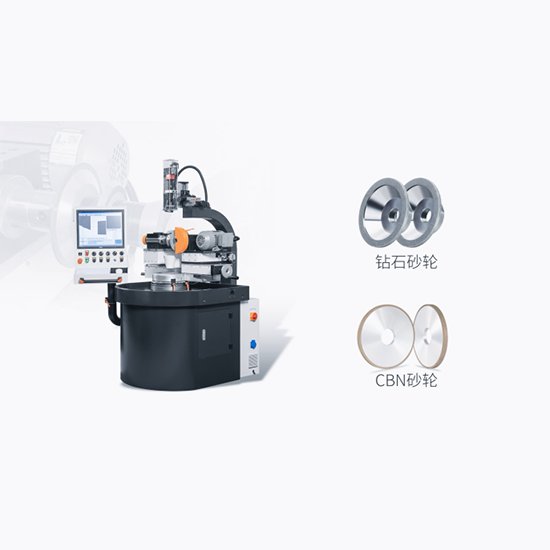
A Grinding wheel truing and dressing machine addresses many hidden problems that directly undermine precision and productivity. These problems often emerge gradually, making them difficult to detect until scrap rates increase or surface quality declines. By restoring wheel geometry and cutting structure, the system brings stability back into the grinding process. Nazai Intelligence focuses on delivering these improvements through engineered accuracy and automated consistency, ensuring manufacturers always operate within optimal grinding parameters. The ability to diagnose and correct these common wheel issues keeps operations efficient, predictable, and profitable.
Runout occurs when the grinding wheel no longer rotates around its true center. Even a small deviation causes uneven stock removal, tapered surfaces, and unstable cutting forces that compromise dimensional accuracy. Truing cuts away high spots and re-establishes a perfect rotational axis, ensuring predictable wheel behavior throughout the grinding cycle. Machines from Nazai Intelligence deliver micron-level correction, allowing manufacturers to stabilize tolerances even in high-precision applications. Restoring geometry early prevents cumulative errors that otherwise impact downstream machining steps.
Wheel loading happens when chips and debris fill the wheel pores, reducing the wheel’s ability to cut. A loaded wheel rubs instead of shearing material, which increases heat and reduces efficiency. Dressing removes loaded material and fractures dull grains to expose fresh, sharp cutting edges. This directly improves cycle times and surface finish quality. Nazai Intelligence integrates intelligent dressing depth control to ensure the wheel remains sharp without removing unnecessary material. Sharper wheels also reduce machine load and energy consumption.
Profile degradation occurs naturally as the wheel wears down through repeated grinding cycles. Even small changes in profile can shift part dimensions or cause mismatches in form grinding applications. A truing and dressing machine restores the original wheel shape to maintain accuracy throughout long-run production. Nazai Intelligence systems use high-precision diamond tools to generate repeatable profiles that match CAD specifications. Maintaining the profile ensures consistent output, fewer adjustments, and reduced need for operator intervention.
Heat is a major enemy of grinding performance. When the wheel becomes glazed or dull, friction rises and generates excessive heat, which risks part burn and damages both wheel and workpiece. Dressing roughens the wheel surface, enabling sharp grains to cut cleanly and keep temperatures under control. Truing restores wheel balance, reducing unnecessary frictional forces that would otherwise increase power consumption. Nazai Intelligence machines incorporate coolant-optimized dressing paths to further support thermal stability and energy efficiency.
Irregular wheel surfaces produce inconsistent cutting forces, leading to vibration or chatter marks on workpieces. These marks affect surface quality, increase scrap rates, and can even damage the spindle. A truing and dressing machine removes wheel irregularities, restores balance, and creates a uniform cutting surface that eliminates vibration at its source. Nazai Intelligence focuses on optimizing wheel symmetry to stabilize the grinding environment and reduce machine wear. Smoother operations extend machine lifespan and improve product aesthetics.
As wheels degrade, instability increases, placing stress on the grinding spindle, bearings, and overall machine structure. Excess vibration or cutting force irregularities can degrade machine accuracy over time. By keeping the wheel perfectly conditioned, a truing and dressing machine ensures stable grinding forces that protect machine components. Manufacturers using Nazai Intelligence solutions report longer spindle life and fewer unplanned maintenance stops. A stable wheel also protects sensitive workpieces from thermal or mechanical damage.
Predictability is essential in industries such as aerospace and medical manufacturing. A consistent wheel condition ensures grinding forces remain stable, making tolerances easier to control. A Grinding wheel truing and dressing machine delivers this consistency by conditioning the wheel on a fixed schedule or based on sensor feedback. Nazai Intelligence enhances predictability with digital feedback that tracks wheel condition in real time. This ensures that every batch meets the same quality standards, reducing variability between operators or shifts.
Grinding accuracy relies on how well the wheel interacts with the workpiece. A conditioned wheel removes material in a stable, predictable manner, making accuracy achievable across long production runs. A truing and dressing machine sharpens the wheel, restores its symmetry, and stabilizes its geometry, directly influencing performance. Nazai Intelligence enhances these benefits through precise control algorithms that optimize the conditioning path. Better accuracy means less scrap, fewer rework cycles, and lower inspection costs.
Concentricity ensures the wheel removes material evenly on every rotation. When the wheel deviates from the center, dimensional errors appear even if the machine itself is well calibrated. Precision truing restores concentricity by correcting geometric deviations and producing a smooth rotational profile. Nazai Intelligence machines achieve this through adaptive control that adjusts tool pressure based on wheel feedback. This yields consistent dimensional accuracy for complex, tight-tolerance parts.
A consistent cutting surface prevents micro-variations in part finish and cutting load. Dressing creates this uniformity by renewing abrasive grains across the wheel face, ensuring each part of the wheel cuts with equal intensity. When powered by Nazai Intelligence technology, dressing cycles become both precise and minimally wasteful. This consistency improves surface uniformity, reduces burn risks, and stabilizes machine load—even during long or heavy grinding cycles.
Form grinding depends entirely on the wheel profile. Any drift in profile directly affects the workpiece shape. A truing and dressing machine with CNC contouring capability recreates complex forms with micron-level repeatability. Nazai Intelligence equips its systems with advanced motion control for precise profile reconstruction, ensuring that every grinding cycle starts with a perfectly formed wheel. This reduces setup variability and increases overall form accuracy.
Sharp grains cut material cleanly and leave smoother finishes. Dressing removes dull grains and exposes new ones, effectively resetting the wheel to its optimal cutting condition. Nazai Intelligence machines enhance this through controlled dressing depths that maximize sharpness without over-cutting the wheel. The result is a refined surface finish with fewer defects and improved consistency. This also reduces downstream polishing time and improves manufacturing throughput.
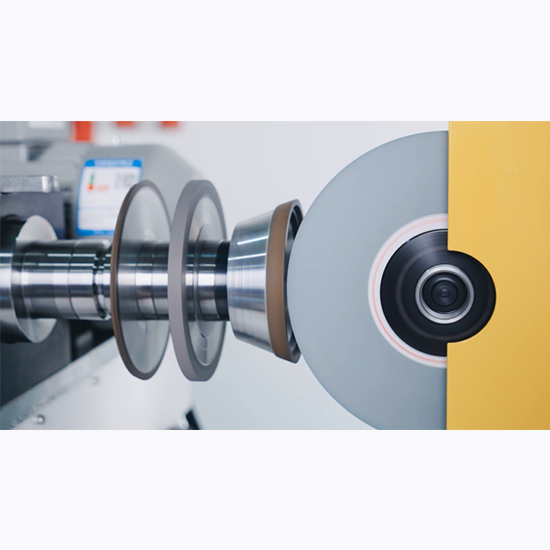
Tool life is influenced by wheel sharpness, stability, and thermal behavior. When wheels are maintained properly, they last longer and perform more predictably. A truing and dressing machine extends wheel life by preventing excessive wear, reducing heat, and protecting machine components. Nazai Intelligence leverages data-driven technology to optimize these conditioning cycles, minimizing waste and maximizing wheel lifespan.
Controlled dressing ensures abrasive grains break at the right points without removing too much material. This balance helps the wheel stay sharp while preserving structural integrity. Nazai Intelligence machines adjust dressing conditions automatically to achieve the optimal level of grain exposure. As a result, wheels wear more evenly, extend their usable life, and maintain high performance across many production cycles.
Heat causes grinding defects and weakens wheel structure. When wheels glaze, friction increases, accelerating wear and risking thermal cracks. A truing and dressing machine restores the wheel’s ability to cut cleanly, lowering temperatures during grinding. Nazai Intelligence enhances temperature control by combining optimized dressing patterns with coolant-integrated dressing paths. This prevents damage that shortens wheel life and increases replacement costs.
Unbalanced wheels generate lateral forces that stress the spindle and bearings. Over time, these forces lead to vibration, decreased machine accuracy, and expensive maintenance. Truing restores wheel balance, reducing stress across the machine’s mechanical components. Nazai Intelligence systems monitor wheel symmetry to maintain optimal balance, prolonging machine life and reducing total cost of ownership.
Predictability reduces maintenance surprises. When dressing and truing cycles are scheduled or automated, the wheel behaves consistently, resulting in fewer unexpected stoppages. Nazai Intelligence solutions provide operators with clear indicators of wheel condition, enabling them to plan maintenance rather than react to failures. This leads to fewer tool crashes, lower repair expenses, and more stable production output.
Truing and dressing are often misunderstood as interchangeable processes, but they function very differently. Truing corrects the geometry of the wheel, ensuring that it rotates in a true circle. Dressing refreshes the wheel surface to improve cutting sharpness. Both are required for precision grinding, and both dramatically influence surface finish, cycle time, and grinding stability. In advanced systems provided by Nazai Intelligence, these processes are precisely controlled to optimize wheel performance and extend tool life across extended production cycles.
Truing removes material from the wheel to restore its roundness and eliminate runout. This ensures that the wheel cuts evenly during every rotation, which is essential for maintaining uniform tolerances. A wheel that is not true generates inconsistent cutting forces, directly compromising part accuracy and increasing scrap rates. Nazai Intelligence systems use stable mechanical platforms and precise motion control to ensure truing produces exact, repeatable geometry. This creates the foundation for productive and stable grinding.
Dressing sharpens the wheel by fracturing abrasive grains and removing embedded debris. This exposes new cutting points, significantly improving grinding efficiency and reducing thermal load. A properly dressed wheel cuts cooler and produces a smoother surface. Nazai Intelligence uses diamond-based dressing tools that optimize grain exposure while minimizing unnecessary wheel wear. This ensures longer wheel life and predictable grinding performance throughout the production cycle.
Neither process alone is sufficient for precision grinding. Truing restores the wheel’s form, while dressing ensures the wheel cuts effectively and remains open. When combined, these processes eliminate vibration, stabilize grinding forces, and enable repeatable part quality. Nazai Intelligence integrates both operations into automated sequences that ensure the wheel is always in optimal condition before high-tolerance work. The synergy between truing and dressing is what allows factories to achieve consistent micron-level tolerances.
Many operators assume truing is only for new wheels or that dressing alone can resolve all wheel issues. This belief leads to inconsistent performance and accelerated wheel wear. Another misconception is that all dressing tools produce similar results; in reality, tool type has a major impact on surface quality. Nazai Intelligence addresses these misconceptions by providing guidance tools and digital monitoring that alert operators when wheels require truing, dressing, or both. This reduces human error and ensures every part meets quality requirements.
Note: Correctly distinguishing between dressing and truing can significantly improve production stability.
A Grinding wheel truing and dressing machine uses several engineered components to produce consistent and predictable results. Each mechanism plays a role in shaping, sharpening, and stabilizing the wheel. Modern systems such as those from Nazai Intelligence integrate automation, precision tooling, and optimized coolant flow to maximize wheel performance. Understanding these mechanisms helps buyers evaluate machinery and build a more efficient grinding workflow.
Diamond is the preferred tool material due to its hardness and longevity. Single-point dressers allow precise form generation, while multi-point tools work well for general surface conditioning. Rotary dressers provide the best form retention and longest tool life, particularly in high-volume applications. Nazai Intelligence evaluates material type, wheel bond, and production requirements before recommending the ideal diamond tooling configuration. This approach ensures optimal wheel conditioning with minimal tooling cost.
Complex grinding applications require tightly defined wheel profiles. CNC truing systems move the diamond tool along precise paths to recreate these geometries accurately. This reduces manual setup errors and improves repeatability across shifts. Nazai Intelligence leverages high-resolution servo systems to achieve extremely stable tool motion, even during complex forms such as turbine blade contours or gear shapes. This ensures that every wheel is shaped consistently, enabling accurate part production from start to finish.
Variability in operator technique often leads to inconsistent dressing quality. Automatic control eliminates this problem by computing optimal dressing parameters and applying them consistently. Depth of cut, feed rate, and tool engagement are monitored in real time to maintain stable cutting conditions. Nazai Intelligence integrates sensor feedback to adjust parameters dynamically, ensuring that wheel surface texture remains uniform. This automation improves quality and reduces the training burden for new operators.
Coolant reduces heat during dressing and truing and helps remove debris from the wheel surface. Without proper coolant delivery, tools wear faster and the wheel surface becomes damaged. Nazai Intelligence designs coolant channels that deliver fluid precisely to the contact zone, improving tool life and stabilizing wheel temperature. This allows the machine to maintain optimal performance, even during heavy or prolonged dressing cycles.
The effectiveness of truing and dressing depends heavily on process parameters. Adjusting these parameters changes wheel sharpness, stability, and surface finish. Understanding how each factor interacts with the wheel helps operators produce consistent, optimized results. Nazai Intelligence provides parameter-recommendation algorithms that support operators and reduce the trial-and-error time typically required in wheel conditioning.
The dressing speed ratio—the relative speed between the dressing tool and the wheel—controls the aggressiveness of the dressing action. A higher ratio creates sharper, more open surfaces, while a lower ratio produces smoother finishes. Incorrect speed ratios lead to poor surface quality or reduced tool life. Nazai Intelligence machines automatically adjust ratios to achieve the texture and shape required for specific applications. This ensures consistent performance across shifts and operators.
Feed rate determines how much material is removed per pass, while depth influences wheel sharpness and profile accuracy. Light passes produce fine finishes, whereas heavy cuts reshape the wheel quickly. Using inappropriate feeds or depths can damage the wheel or shorten its usable life. Nazai Intelligence optimizes these parameters with intelligent motion control that adapts to wheel condition in real time. This results in efficient conditioning without unnecessary wheel loss.
Different wheels require different conditioning approaches. Soft wheels load quickly and require frequent dressing, while hard wheels need controlled, deeper cuts. Superabrasive wheels such as CBN and diamond require specialized dressing tools and lower forces. Nazai Intelligence machines support multiple wheel materials and allow parameter presets for fast setup. This flexibility helps factories maintain high quality regardless of wheel type.
Misalignment causes uneven tool engagement and leads to poor conditioning quality. Tool wear reduces precision and must be monitored to maintain accuracy. Environmental factors such as temperature and vibration also affect dressing consistency. Nazai Intelligence includes tool-wear simulation and environmental compensation features that adjust process behavior to maintain stability. These intelligent controls ensure consistent wheel performance even under variable shop-floor conditions.
Table 1: Key Differences Between Truing and Dressing (B2B Perspective)
| Item | Truing (Form Correction) | Dressing (Surface Renewal) |
|---|---|---|
| Main Purpose | Restore geometry and roundness | Restore sharpness and openness |
| Impact on Production | Affects tolerance and runout | Affects cutting efficiency and heat control |
| Tool Type | Single-point diamond, form rollers | Multi-point diamond, dressing sticks, rotary tools |
| Best Application | Form grinding, ultra-precision machining | Routine dressing, heat control, fine finishing |
| Nazai Intelligence Advantage | High-precision geometry control | Intelligent texture control and longer wheel life |
Table 2: Key Parameters Affecting Wheel Life
| Parameter | Influence Mechanism | Common Issues | Nazai Intelligence Solutions |
|---|---|---|---|
| Speed Ratio | Controls wheel surface roughness | Unstable surface quality | Automated ratio adjustment |
| Dressing Depth | Determines sharpness & wear rate | Over-wear or insufficient sharpness | Intelligent depth optimization |
| Wheel Hardness | Determines grinding resistance | Burn or poor cutting | Multi-parameter presets and auto-matching |
| Coolant Conditions | Controls heat and chip removal | Cracks, clogging | Precision coolant-path design |
Table 3: Manual vs Automatic Dressing (Quantitative Comparison)
| Metric | Manual Dressing | Automatic Dressing (Nazai Intelligence) |
|---|---|---|
| Accuracy | Depends on operator skill | Micron-level stability |
| Consistency | High variability | Consistent across shifts |
| Wheel Life | Unstable; operator-dependent | 20–40% longer (verification required) |
| Downtime | High and unpredictable | Significantly reduced; scheduled |
| Suitability | Difficult for complex profiles | Ideal for complex geometry and precision grinding |
Manual dressing is common in small workshops but presents variability, inconsistency, and higher long-term costs. A dedicated machine provides automated precision and eliminates operator error. Factories adopting Nazai Intelligence systems experience substantial gains in accuracy, stability, and wheel life. The comparison highlights why high-value production environments increasingly rely on automated solutions.
Manual dressing depends on operator skill, making precision inconsistent. Complex shapes are nearly impossible to dress accurately by hand. Automated systems replicate profiles with micron-level fidelity and maintain this accuracy across long production cycles. Nazai Intelligence improves this with CNC interpolation and adaptive force control, guaranteeing consistent profiles even under heavy use.
Human technique creates irregular tool pressure and wear. Over time, this reduces wheel conditioning quality and introduces surface variability. Automated systems use constant pressure and controlled tool motion, reducing wear and ensuring predictable results. Nazai Intelligence integrates tool-wear compensation to prolong diamond life and maintain stable cutting performance.
Manual dressing requires stopping the machine, positioning tools, and performing multiple passes. Automated dressing significantly shortens this cycle. It enables predictable maintenance schedules and reduces production interruptions. In many cases, Nazai Intelligence users see downtime reductions of 30% or more (verification required). Faster dressing cycles increase machine utilization and improve overall productivity.
Better wheel conditioning reduces wheel waste, spindle wear, and rework costs. Manual dressing often removes excessive wheel material, increasing consumable expenses. Automated systems remove only what is needed, maximizing wheel life. Nazai Intelligence helps factories calculate expected savings using production data and wheel consumption histories, supporting more strategic investments.
Best practices allow factories to extract maximum value from their truing and dressing equipment. When combined with Nazai Intelligence technology, these practices lead to predictable results and longer wheel life. Structured processes, consistent monitoring, and intelligent automation help ensure the wheel remains in optimal cutting condition at all times.
Instead of waiting for defects to appear, factories should implement predictive dressing based on measured wheel load, part finish, and grinding forces. Predictive cycles eliminate guesswork and reduce scrap. Nazai Intelligence supports predictive maintenance through integrated sensors and real-time analytics. These insights help operators optimize schedules for both wheel life and production efficiency.
Different bonds and abrasive materials require different dressing strategies. Selecting the wrong tool causes premature wear or insufficient cutting performance. Nazai Intelligence provides guidelines and automated tool-selection presets that match wheel characteristics to the correct dressing parameters. This reduces operator errors and improves wheel conditioning consistency.
Wheel behavior reveals early signs of performance decline. Changes in spark color, sound, or cutting force indicate when dressing is required. Automated monitoring systems from Nazai Intelligence detect these changes early and alert operators or trigger conditioning cycles automatically. This proactive approach maintains quality and prevents catastrophic wheel failure.
Common mistakes include excessive dressing depth, using worn diamonds, neglecting coolant flow, or skipping truing when needed. These errors reduce productivity and damage equipment. Nazai Intelligence minimizes such risks through guided workflows and process-validation tools that ensure correct conditioning steps. Intelligent safeguards help maintain a high level of process reliability.
A grinding wheel truing and dressing machine restores accuracy, reduces heat, and extends wheel life for stable production. It improves finish quality and lowers costs for factories that rely on tight tolerances. NAZAI INTELLIGENCE enhances this value with smart automation and predictive control that turn wheel conditioning into a reliable process. Its solutions help manufacturers boost throughput, cut downtime, and maintain long-term precision.
A: A Grinding wheel truing and dressing machine restores wheel geometry and sharpness, which stabilizes cutting forces and improves part accuracy.
A: Dressing removes dull grains and loading, allowing the wheel to cut cooler and last longer during production.
A: A Grinding wheel truing and dressing machine is used when the wheel shows runout, burns parts, or loses surface finish quality.
A: Yes, automated systems shorten dressing cycles and create predictable maintenance schedules that reduce unplanned downtime.
A: Users gain better surface finish, fewer rejects, lower wheel costs, and more stable performance across long grinding runs.


