
Views: 0 Author: Site Editor Publish Time: 2026-06-28 Origin: Site


Transitioning from standard geometries to high-mix, tight-tolerance carbide tools demands a fundamental shift in machine kinematics. Toolrooms constantly battle rising scrap rates. Prolonged setup times severely disrupt aggressive production schedules. Modern precision applications require absolute structural stability. We introduce the CNC Tool Grinding Machine C828 as a highly targeted solution. It explicitly serves 3C (Computer, Communication, Consumer electronics) carbide applications and intricate tool geometries. This platform establishes a transparent, technical, and operational evaluation framework. Production managers and toolroom supervisors can apply these parameters to assess their current capabilities. Determining if the C828 aligns with specific production bottlenecks requires an objective review of its hardware and software integrations.
Precision Dynamics: The C828 utilizes 5-axis 5-linkage technology and ultra-linear motor drives to maintain sub-micron accuracy during complex rotary tool grinding.
Application Focus: Specifically engineered to handle the rigidity requirements of hard materials, excelling in carbide cutter and non-standard cutter grinding.
Operational Mitigation: Addresses common toolroom friction points, including programming complexity, wheel dressing intervals, and thermal management (coolant flow).
Adoption Reality: Requires upfront investment in operator training for advanced software but yields significant cycle-time reductions for high-mix production environments.
Standard grinders consistently lack the dynamic stiffness needed for advanced toolmaking. They cannot sustain the rapid interpolation speeds required for modern flute generation. Variable-helix designs punish weak mechanical systems. Pushing basic machines past their intended limits multiplies surface defects exponentially.
Vibration acts as the primary enemy during carbide grinding. The material exhibits extreme hardness but inherent brittleness. Any chatter degrades wheel life rapidly. It heavily damages the final edge quality. Poor machine rigidity directly produces out-of-tolerance micro-tools. Operators frequently reduce feed rates manually. They sacrifice throughput simply to maintain acceptable finishes. This operational compromise actively destroys production schedules.
The 3C manufacturing sector operates under relentless precision pressures. Miniaturization forces engineers to design increasingly complex micro-tools. Machining exotic materials demands absolute repeatability across massive batches. A standard CNC Tool Grinding Machine often struggles here. Thermal expansion and mechanical wear cause conventional systems to drift out of specification. 3C components tolerate zero deviation during continuous shifts.
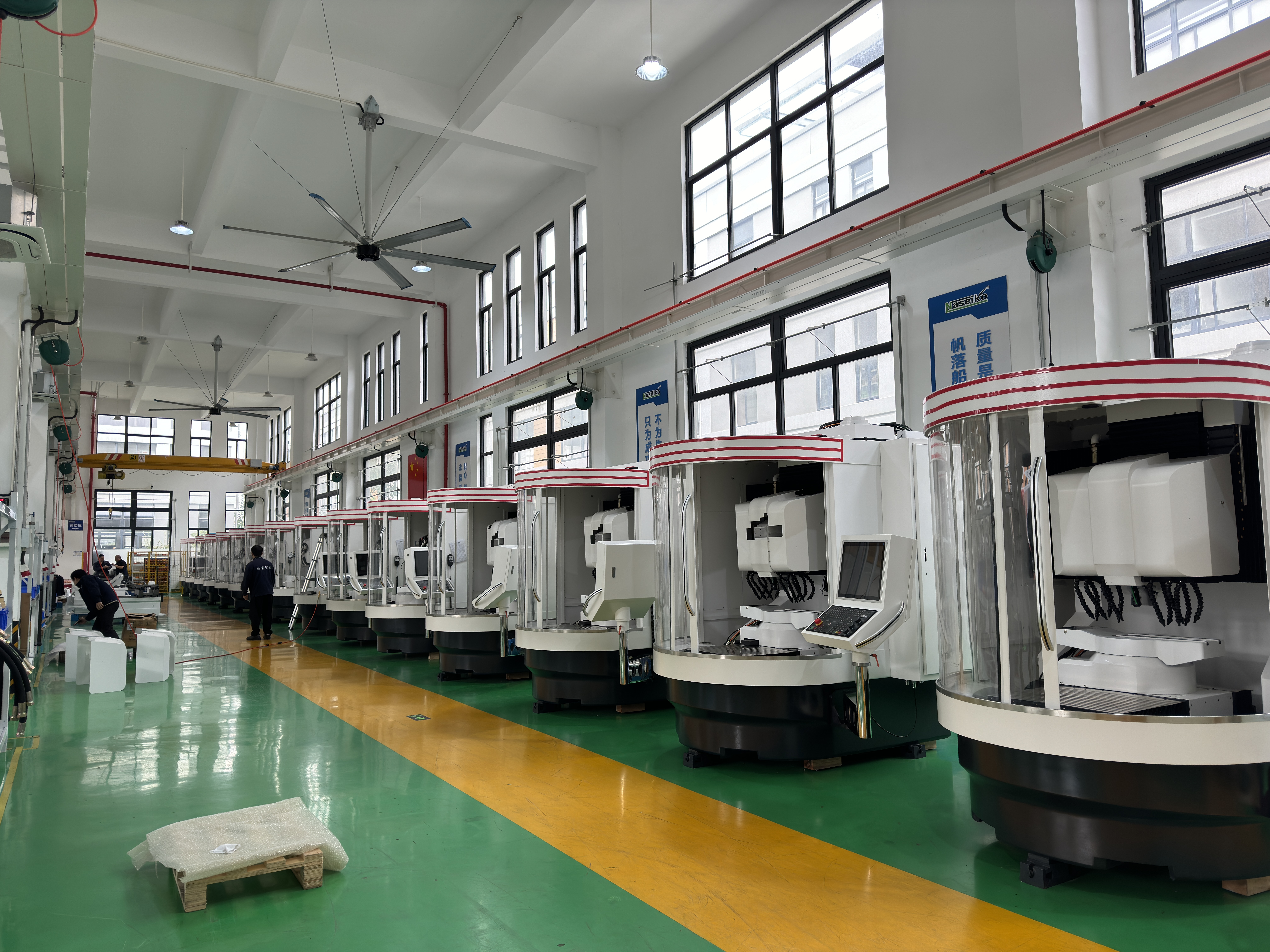
Evaluating hardware means mapping physical specifications to tangible shop-floor results. You must scrutinize the foundation of the machine. The core structure dictates how well your facility handles demanding tool prints.
Continuous interpolation prevents surface defects. Fast directional changes normally leave dwell marks on complex radii. However, complex rotary tool grinding relies on fluid, simultaneous axis movement. 5-axis 5-linkage systems eliminate brief pauses during cutting paths. You drastically reduce manual setup changes. Multi-step tools process completely in one single clamping operation.
Traditional ball screw drives inevitably suffer from mechanical wear. Friction introduces backlash over time. The C828 abandons ball screws for ultra-linear motor drives. These direct-drive systems eliminate physical transmission components. Zero backlash translates to flawless surface finish quality. You secure long-term positioning accuracy when grinding extremely hard carbides. The machine maintains its baseline precision for years without mechanical degradation.
Aggressive material removal sends high-frequency vibrations through the structure. Machine bed composition dictates how well those forces dissipate. A heavy, dense frame dampens chatter effectively. It isolates the grinding zone from external harmonics. Thermal stability is equally critical. The base must resist expansion during long shifts. This guarantees exact dimensions regardless of ambient factory temperatures.
A mechanically perfect machine can still fail your toolroom. Peripheral challenges frequently bottleneck overall throughput. We must address the specific pain points operators face daily. Excellent hardware requires equally robust support systems.
Clunky software ruins good hardware. Evaluating a milling cutter grinding machine requires a deep look at its interface. Operators need highly visual, intuitive programming environments. Complex geometries demand robust simulation capabilities. Advanced simulation allows programmers to catch collision risks immediately. You verify geometry errors virtually before running the first physical pass.
Manual wheel dressing introduces severe inconsistency. It forces operators to stop production constantly. Automated dressing cycles resolve this friction entirely. The machine probes and dresses wheels without human intervention. Tight-tolerance profiles demand perfect wheel shapes continuously. Automated management ensures the wheel profile remains completely stable. You eliminate operator dependency and guarantee identical cuts.
Carbide fractures under extreme localized heat. Targeted coolant delivery acts as the primary defense against thermal micro-cracking. Fluid must strike the exact point of contact. High-pressure jets clear swarf and cool the edge simultaneously. Furthermore, carbide dust rapidly thickens coolant oil. You need exceptional filtration systems operating at micron levels. Clean fluid maintains optimal surface finishes and protects internal linear scales.
Custom tool manufacturing defines modern toolroom success. Flexibility dictates whether a machine earns its floor space. You need equipment capable of rapid adaptation.
Custom batches require fast changeovers and foolproof verification. The ability to switch between tool families defines operational efficiency. We evaluate success based on setup reduction and first-part accuracy.
A truly capable system pivots quickly. The C828 transitions from standard end mills to highly customized step-drills effortlessly. We assess agility through software changeover times. Operators load new programs, change collets, and begin grinding in minutes. This operational flexibility maximizes daily throughput across highly variable part mixes.
Closed-loop measurement guarantees precision. non-standard cutter grinding involves highly specialized profiles. In-process probing verifies the tool geometry while it remains clamped. The system reads variations and applies micro-adjustments automatically. First-part accuracy matches the final part perfectly. This consistency removes all guesswork from custom batch manufacturing.
System Feature | Standard Grinders | C828 Architecture | Operational Impact |
|---|---|---|---|
Drive Mechanism | Ball Screws | Ultra-Linear Motors | Zero backlash, no mechanical transmission wear over time |
Kinematics | 3-Axis or 4-Axis | 5-Axis 5-Linkage | Single-setup processing for highly complex tool profiles |
Measurement | Manual / External | In-Process Probing | Closed-loop precision, dramatically lower scrap rates |
Setup Time | High (Manual changes) | Low (Software simulation) | Higher throughput capability for high-mix batch work |
Deploying advanced machinery always involves operational friction. We prioritize transparency regarding installation requirements. Planning ahead prevents costly deployment delays and unexpected facility expenses.
High-end grinders demand specific environmental controls. You must allocate adequate floor space for peripheral systems. Filtration units and chillers require substantial room. Foundation stability is non-negotiable. An unstable floor transmits heavy vibrations from nearby equipment. Ambient temperature control strongly influences absolute precision. You must maintain a stable climate to maximize linear motor accuracy.
Moving operators from older 3-axis setups creates a significant learning gap. Full 5-axis 5-linkage environments operate on different kinematic principles. You cannot rely on basic conversational programming alone. Comprehensive CAD/CAM proficiency becomes absolutely vital. Management must commit to upfront operator training immediately. Properly trained staff will fully exploit the machine's geometric capabilities.
Maintenance schedules look entirely different for linear drive systems. You no longer worry about ball screw degradation or greasing. However, environmental cleanliness becomes hyper-critical. Linear scales demand pristine internal conditions. You must maintain perfect sealing against metallic debris.
Common mistakes to avoid during implementation:
Ignoring critical upgrades to central coolant filtration systems.
Placing the machine near vibration-heavy stamping presses.
Skipping advanced software simulation training for lead programmers.
Failing to monitor ambient facility temperatures consistently.
Deciding to acquire this technology requires clear strategic alignment. You must evaluate your exact production pain points carefully. Match the machine's strengths directly to your operational bottlenecks.
Toolrooms aggressively migrating into the tight-tolerance 3C carbide sector.
Facilities battling unacceptable scrap rates on complex rotary tools.
Manufacturers plagued by machine backlash and thermal drift on older platforms.
Shops exclusively manufacturing simple, low-precision cutting tools.
Facilities strictly running high-volume HSS (High-Speed Steel) standard tools.
Operations unable to justify the necessary environmental upgrades for linear drives.
Start by requesting a targeted time-study. Submit your most challenging non-standard tool print directly to the application engineers. Arrange a live or virtual cutting demonstration. Focus entirely on how easily your operator navigates the programming software. Verify the actual cycle time against your current internal metrics before making any final commitments.
The CNC Tool Grinding Machine C828 stands as a premier evaluation candidate. It directly aids facilities constrained by traditional grinding mechanics. You fundamentally reduce setup variables and eliminate manual interventions. Decreased scrap rates immediately improve your operational margins. The system grants you the confidence to pursue high-complexity carbide tooling contracts. Embrace this technological transition to redefine your production ceilings. Consult an application engineer to simulate your toughest geometries today. Prove the performance on your own parts and take control of your toolroom capabilities.
A: The C828 combines a high-rigidity machine bed with ultra-linear motor precision. This eliminates mechanical backlash completely. It utilizes specialized software cycles optimized for micro-tooling. This ensures the tight-tolerance repeatability strictly demanded by modern electronics manufacturing.
A: Yes, it excels at small batch custom work. Intuitive simulation software catches errors quickly. Quick-change probing systems drastically reduce your initial setup times. It pivots rapidly between entirely different tool profiles without prolonged manual adjustments.
A: 5-axis kinematics enable complete grinding in one single clamping. You can process complex flutes, clearance angles, and gashing without moving the part. This drastically reduces run-out and setup errors compared to traditional multi-setup methods.
A: Linear drives require significantly less mechanical maintenance than ball screws because they lack physical thread wear. However, they demand strict adherence to coolant filtration. You must maintain perfect sealing to prevent magnetic contamination on the tracks.


